From the Rails: Has Racing Forgotten What Makes Good Television?
There will be better horses running elsewhere this season than those contesting the Ayr Gold Cup this afternoon, and there will certainly be races carrying greater international prestige, but I’m not convinced there will be many that provide better television.
That distinction is worth making because the £180,000 Gold Cup, centrepiece of Scotland’s biggest Flat meeting, has found itself shifted from ITV1 to ITV3 while the main channel accommodates Millwall against West Ham in the Championship.
Ayr managing director David Brown is understandably disappointed, particularly when he says last year’s Gold Cup generated greater betting turnover than the St Leger. Yet rather than spend another afternoon complaining about football’s apparently unstoppable ability to occupy television schedules, perhaps racing should use the occasion to think about what actually makes people watch.
I’m not sure the answer is always the quality of the horses.
Prestige and entertainment aren’t necessarily the same thing
Racing understandably attaches enormous importance to its Pattern programme. Group Ones identify champions, influence breeding careers and provide the international comparisons upon which much of the bloodstock industry depends, so nobody seriously interested in the sport would suggest they aren’t important.
But television asks a slightly different question.
Is this worth watching?
A race doesn’t automatically become exciting because the participants have higher official ratings, any more than a handicap becomes inferior entertainment because the horses aren’t future stallions.
The Ayr Gold Cup has survived for generations because people enjoy it. Its attraction lies partly in the fact that nobody really knows what’s going to happen.
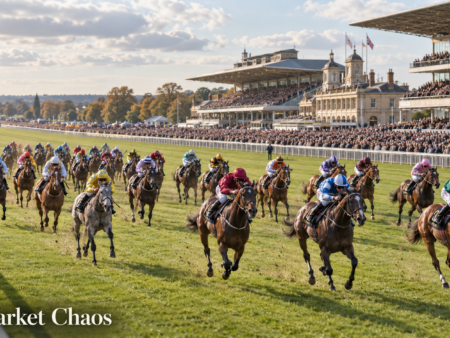
There is the draw to consider, the pace of the race, changing ground, twenty-odd individual horses and the possibility that the field will divide into groups which appear to be competing in entirely different races until somewhere inside the final furlong.
For the punter, it is a glorious nuisance. You can spend half the week studying it and still discover within ninety seconds that you’ve completely misunderstood what was going to happen.
That uncertainty is not something racing needs to apologise for. It is one of the sport’s greatest assets.
Perhaps we underestimate the great handicaps
Somewhere along the way, racing appears to have developed a slight inferiority complex about its big handicaps.
We celebrate Group races because they demonstrate excellence, while handicaps are sometimes treated as though they belong primarily to the betting side of the sport rather than its serious sporting programme.
I’m not convinced the public sees the distinction in quite the same way.
The Grand National is technically a handicap, yet nobody seriously doubts its place among the most important races staged in Britain. The same principle, on a smaller scale, helps explain the enduring appeal of races such as the Stewards’ Cup, Cambridgeshire and Ayr Gold Cup.
They have names people remember and histories people understand, but most importantly they provide uncertainty.
A casual television viewer doesn’t need to know the difference between a Group Two and Group Three to understand twenty horses approaching the final furlong with half a dozen still capable of winning.
Sometimes racing makes itself more complicated than it needs to be.
Television needs characters as well as horses
There is another ingredient that big handicaps frequently provide rather well: human stories.
Paul Mulrennan goes into today’s race still searching for his first Ayr Gold Cup, having already won both the Bronze and Silver versions. For somebody who has spent much of his career riding in the north, completing that particular set would mean something.
That is an immediately understandable story.
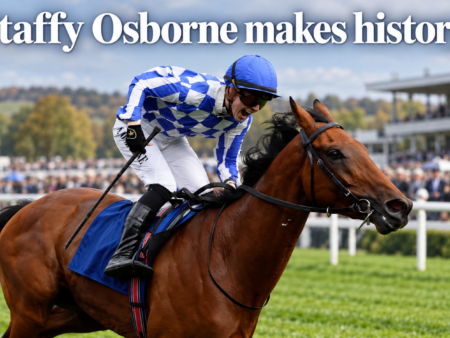
You don’t need a detailed knowledge of sectional times or pedigrees to appreciate a jockey trying to win a race that has repeatedly escaped him, just as viewers last weekend didn’t need to understand every detail of the form book to appreciate what Saffie Osborne achieved when becoming the first female jockey to win a British Classic.
People connect with people.
Racing occasionally forgets that when it markets almost everything around the horse, the race classification and the prize-money.
The horses will always be the stars, but television needs somebody to care about them.
ITV3 isn’t the enemy
None of this means ITV has treated racing badly.
Far from it. The broadcaster continues to provide extensive terrestrial coverage and anybody who wants to watch today’s Gold Cup can do so without paying a subscription. ITV3 may not have the prominence of ITV1, but the race hasn’t been hidden behind a paywall.
The concern lies further ahead.
ITV has an increasingly crowded sporting schedule, with football already competing for space and more rugby union coming. Racing will inevitably find itself fighting harder for main-channel afternoons.
That competition isn’t going away, and there is little point behaving as though broadcasters owe the sport a particular position in the schedules simply because a race has been run for a very long time.
What racing can do is make better use of what it already possesses.
Rather than continually searching for new formats and new ways of presenting the sport, perhaps there is a case for looking again at some of the races that have been entertaining people perfectly well for generations.
The Ayr Gold Cup is one of them.
Give people a reason to care
Racing faces plenty of genuine problems, but a shortage of compelling sport isn’t one of them.
What it sometimes lacks is the confidence to present that sport simply.
Today’s Gold Cup doesn’t require a complicated explanation. A huge field of sprinters will line up for one of Britain’s famous handicaps, the draw may matter enormously, several jockeys and trainers have spent months trying to get their horses there in the right condition, and a few minutes later one of them will have won £180,000 while everybody else starts explaining what went wrong.
That’s racing.
Whether Millwall and West Ham attract a bigger television audience this afternoon is ultimately a commercial question for ITV, and racing cannot expect sentiment to decide it.
But if the sport wants to make itself harder to shift from ITV1 in future, it might begin by recognising that entertainment doesn’t always arrive carrying a Group One label.
Sometimes it arrives with twenty-odd horses spread across the width of Ayr and several thousand punters wondering why they ever thought solving the race looked easy.
— John Mills