The Ebor Still Has the Power to Make Fools of Us All
Irish-trained horses had dominated York’s great handicap and Willie Mullins arrived with another fascinating favourite, but Daiquiri Bay’s victory was a reminder that the Ebor remains one of British racing’s most gloriously difficult races to second-guess.
By the time the runners went to post for Saturday’s Ebor, there was a familiar feeling surrounding Willie Mullins and Love Me Tender. Here was another lightly raced horse from the most dangerous staying yard in Europe, carrying a workable weight into a race which Irish trainers have increasingly made their own, and the market had responded accordingly. Love Me Tender started the 7-2 favourite, while Joseph O’Brien’s Emit was another prominent Irish challenger at 4-1.
A little over three minutes later, Love Me Tender was tenth, Emit was twelfth and Alan King was standing in the York winner’s enclosure trying to put into words what Daiquiri Bay had just achieved.
Therein lies much of the enduring appeal of the Ebor.
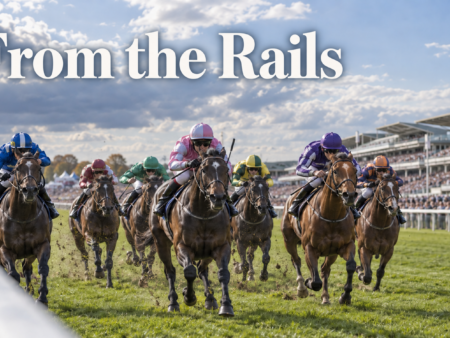
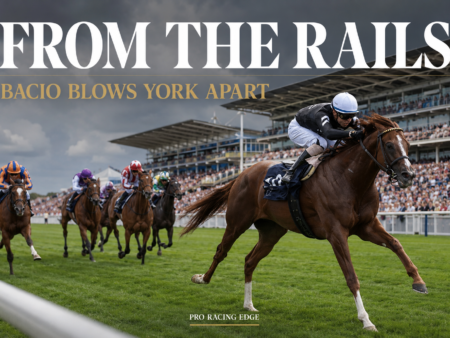
For all the sophisticated analysis now available to punters, for all the sectional times, ratings, algorithms and trends we can apply to a race beforehand, there remains something wonderfully unruly about putting 22 staying handicappers onto the Knavesmire and asking them to sort the matter out over a mile and six furlongs. Saturday’s finish could hardly have illustrated the point better, with Daiquiri Bay holding Hopewell Rock by a head and Opportunity another neck away in third after three horses from very different backgrounds had arrived at almost precisely the same place at almost precisely the same time.
It was also an Ebor which appeared, beforehand at least, to have all the ingredients for another chapter in Ireland’s remarkable recent relationship with the race. Six of the previous ten winners had been Irish-trained and Mullins, in particular, has changed the way these valuable British staying handicaps are viewed. Horses arriving from jumping yards or with unfamiliar European form no longer slip quietly beneath the radar simply because British Flat punters aren’t quite sure what to make of them.
If anything, the pendulum has swung the other way. Nowadays, put a relatively unexposed stayer into the care of Willie Mullins and the market generally assumes he knows something the rest of us don’t.
Quite often, of course, he does.
Love Me Tender was easy to understand as a favourite. Twice successful in Germany before finishing fourth in Listed company in France, he was making his first appearance for Mullins from a mark of 96 and carried the same HOS Syndicate colours which had been successful in the previous two Ebors with Absurde and Ethical Diamond. If somebody had invented him specifically to frighten bookmakers during Ebor week, they could hardly have done a better job.
Yet racing has never been particularly interested in maintaining a good narrative simply because everybody has agreed upon it beforehand.
The Obvious One Wasn’t the Favourite
Looking back now, there is a certain irony in the fact that one of the most straightforwardly progressive horses in the race was available at 10-1.
Daiquiri Bay hadn’t arrived from an obscure race somewhere in Europe and there was no mystery surrounding his trainer. He had won at Newmarket on his seasonal return before taking the Copper Horse at Royal Ascot, where his performance convinced King and Rossa Ryan that the Ebor should become his principal summer target. King then kept him away from the track for two months and brought him directly to York, where twelve months earlier he had finished third in the Melrose over the same course and distance.
Everything was there in plain sight, which in a big handicap can sometimes make a horse less fashionable rather than more.
Punters are naturally attracted to what hasn’t yet been discovered. The unknown quantity promises the possibility that the handicapper has made a serious mistake, whereas a horse whose recent victories have been watched by everybody somehow feels as though his secrets must already be out. Daiquiri Bay had risen in the weights and everybody knew he was improving, but perhaps what Saturday demonstrated was that the improvement had not finished simply because it had become obvious.
King certainly believed there was more to come. His previous Ebor runners, by his own assessment, had generally been exposed horses by the time they reached York; Daiquiri Bay was different because he remained on the upgrade. The rain which arrived during the week was another positive, and the preparation from Ascot had gone exactly as his trainer wanted.
None of that made victory inevitable, as the final few yards demonstrated rather dramatically, but it did mean the winner possessed one of the qualities which repeatedly proves decisive in major handicaps: he was still becoming a better horse.
That is easy to identify afterwards and considerably harder at half past three on Saturday afternoon.
Perhaps We Look Too Hard for the Clever Answer
There is a broader point here for anybody who spends time trying to solve races such as the Ebor.
Modern racing analysis has improved enormously, and nobody sensible would argue that more information has made punters worse informed. We can examine races in a level of detail which would have been unimaginable twenty years ago, while international form is far easier to assess and horses arriving from France, Germany or Ireland no longer carry quite the mystery they once did.
The danger comes when searching for the clever answer becomes more attractive than recognising the obvious one.
Daiquiri Bay had won his two previous races, stayed the trip, had run well over York’s course and distance, came from an outstanding trainer and had deliberately been prepared for the race. There were no hidden clues requiring detective work and no obscure piece of form which needed translating. He was simply a progressive staying handicapper whose trainer believed he had not yet reached his ceiling.
At 10-1, that turned out to be quite enough.
It is worth remembering because the great festival handicaps encourage overthinking like few other races. Twenty-two runners inevitably create twenty-two stories, and by Saturday morning it is perfectly possible to construct a persuasive case for horses whose chance seemed considerably less obvious on Monday.
Most experienced punters have done it. By the time the race starts, the horse you initially fancied has somehow been replaced by one whose great-grandmother once won on good-to-soft ground at Pontefract.
Then the obvious horse wins.
The Ebor Has Changed Without Losing Its Character
Saturday also said something interesting about the way the Ebor itself has evolved.
The increasing Irish influence has unquestionably strengthened the race, and trainers such as Mullins have forced British yards and punters alike to think more internationally about staying handicappers. Yet the winner being trained by Alan King hardly represented a return to the old order, because King himself embodies much of the same crossover between Flat and National Hunt racing.
There was a time when a leading jumps trainer winning the Ebor would have been treated as an entertaining curiosity. It isn’t anymore. Mullins has destroyed that distinction almost single-handedly at times, while King has been winning good Flat races for long enough that describing him purely as a National Hunt trainer does him a disservice.
Perhaps staying races were always likely to become the meeting point between the codes. The ability to develop stamina, keep horses sound and bring them to a peak for one important target matters whether there are hurdles in front of them or not, and Saturday’s Ebor was ultimately won by a trainer who had spent two months preparing one horse for one afternoon.
The fact that Daiquiri Bay prevailed by only a head makes the preparation seem more important, not less. Had he arrived at York fractionally below his best, Hopewell Rock would presumably be the horse everybody was discussing this morning.
Such are the margins on which supposedly clever analysis eventually depends.
And Now Everybody Wants to Go to Melbourne
As inevitably happens with the Ebor these days, the conversation had barely moved beyond the photograph before somebody mentioned the Melbourne Cup.
Daiquiri Bay’s victory earns him a guaranteed place at Flemington, and Ryan was understandably enthusiastic about the possibility. King sounded much less certain, with the Group 1 Long Distance Cup at Ascot another option later in the year. Recent reporting also suggests Hopewell Rock’s connections remain keen on Melbourne despite missing the automatic berth by a head.
That discussion can wait. There is a tendency in racing to respond to every major victory by immediately asking where the horse is going next, when occasionally the more interesting thing is to consider what has just happened.
Daiquiri Bay began this season as a useful staying handicapper who had undergone a gelding operation during the winter. He has now won three successive races, including at Royal Ascot and York, and has progressed sufficiently to put international races into the conversation.
Whether he ultimately reaches Australia is almost secondary to the progression which has created the possibility.
For the Ebor itself, meanwhile, Saturday provided another reminder of why the race survives every attempt to make complete sense of it. The Irish challenge was powerful, the favourite carried the colours which had won the previous two editions, Willie Mullins once again appeared to possess the intriguing horse everybody feared might be thrown in, and yet the answer was sitting at Barbury Castle all along.
Next August we’ll study the entries, examine the weights, search for the unexposed Irish horse and convince ourselves that this time we’ve cracked it.
The Ebor will probably be waiting to make fools of us again.
The John Mills View
I have always thought there is a particular danger with races such as the Ebor of becoming so determined to find something nobody else has spotted that you end up ignoring the evidence sitting directly in front of you.
Daiquiri Bay is a pretty good example. He had won at Newmarket, improved again to win at Royal Ascot, had previous form over the Ebor course and distance and was trained specifically for the race by Alan King. There wasn’t anything particularly mysterious about him, yet at 10-1 he was more than twice the price of a favourite having his first start for Willie Mullins.
I can understand why Love Me Tender was popular because I looked at him exactly the same way as everybody else. Mullins has trained us to become suspicious whenever one of these horses appears near the bottom of the weights in a valuable staying handicap, and his record means that suspicion is perfectly justified.
What Saturday reminded me is that reputation shouldn’t replace judgement.
The other thing I liked was King’s preparation. Once Daiquiri Bay won at Ascot, they decided the Ebor was the race they wanted and left him alone until York. In a sport where everybody is naturally impatient to run when a horse is in form, I still think knowing when not to race one is an underrated part of training.
As for whether Daiquiri Bay should now go to Melbourne, I’d leave that decision to Alan King. He has done a fairly decent job of deciding where the horse should run so far.
I wouldn’t start telling him now.
John Mills
Pro Racing Edge