I’ve Been Wrong Before… But I Don’t Think I Am This Time
By John Mills Racing
I’ve spent most of my life standing on racecourse rails.
I’ve watched champions emerge, legends cement their place in history and gifted young jockeys arrive with the weight of expectation resting squarely on their shoulders. I’ve also watched many of those same careers drift away, not because the talent disappeared, but because racing has a habit of reminding us that ability alone is never enough.
That’s why I don’t make predictions lightly.
I still remember the excitement surrounding Steve Cauthen’s arrival from America. Here was a jockey who had already conquered one continent and was now ready to test himself on another. The expectation was enormous and, to his credit, he justified almost every bit of it.
A few years later came Walter Swinburn. I can still picture Shergar’s Derby as though it were yesterday. Watching that young jockey guide one of the greatest Derby winners of modern times, it was impossible not to think the sport had discovered another superstar. Walter enjoyed a magnificent career, but his life also reminded us that success on the racecourse offers no guarantees away from it.
More recently we’ve admired Ryan Moore’s extraordinary judgement and witnessed Oisin Murphy’s natural brilliance. Murphy’s ability in the saddle has never been in doubt, yet his career has also shown how quickly off-course decisions can threaten even the brightest of futures.
Every one of those jockeys possessed exceptional talent.
Every one of them travelled a different road.
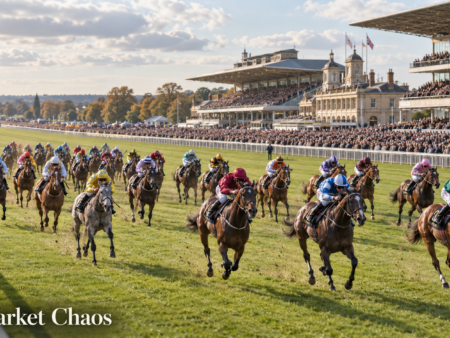
That’s why I found myself thinking long after the Sussex Stakes at Goodwood had finished.
Most people will remember Bow Echo, and rightly so. Completing a Group 1 treble was an outstanding achievement and confirmed the horse as one of the stars of his generation.
Yet while everyone else was talking about the horse, I couldn’t stop thinking about the young man wearing the saddle.
Billy Loughnane didn’t win me over because he produced a spectacular finish or because he pulled off some impossible manoeuvre that had the grandstands roaring.
He impressed me because he never looked like a young jockey riding in one of the biggest races of his career.
He looked as though he’d been doing it all his life.
That might sound like a small observation.
I don’t think it is.
After watching this sport for decades, I’ve come to believe the greatest jockeys share one characteristic above everything else. They never allow the race to become bigger than they are. Pressure doesn’t force them into hurried decisions. Big occasions don’t tempt them into unnecessary risks. They trust their judgement because they understand the race unfolding beneath them.
Good jockeys often react to what is happening.
The very best seem to know what is about to happen.
Watching Billy Loughnane at Goodwood, I saw a young rider who never looked hurried, never appeared flustered and never seemed to chase the race. He allowed it to develop, trusted his own judgement and made his decisions with a calmness that simply didn’t match his age.
As I watched him, one thought kept returning to me.
He rides like a young man with an old head on his shoulders.
That isn’t something you can teach.
You can improve balance. You can develop strength. You can learn race tactics through experience. But the instinct to remain composed when thousands are watching and everything is happening at racing speed is something far rarer.
It’s what separates very good jockeys from exceptional ones.
Now, before anyone accuses me of getting carried away, let me make something absolutely clear.
I’m not saying Billy Loughnane will become the next Lester Piggott. I’m not suggesting he’ll surpass Ryan Moore or Frankie Dettori, nor am I pretending that one outstanding afternoon guarantees a legendary career.
Racing doesn’t work like that.
I’ve watched too many careers to believe success is inevitable.
I’ve seen brilliant young riders suffer injuries at the wrong moment. I’ve seen confidence disappear. I’ve seen personal problems derail careers that looked destined for greatness. Racing has a cruel way of humbling those who appear untouchable.
That’s precisely why this opinion means something to me.
It isn’t based on one winning ride.
It’s based on everything I’ve watched before it.
Standing on those rails over the years has taught me that genuine greatness rarely announces itself with fireworks. More often, it arrives quietly. A decision made under pressure. A display of patience when others lose theirs. A level of maturity that simply shouldn’t exist in someone so young.
Most people don’t notice those moments.
The experienced ones do.
Perhaps that’s why I couldn’t shake the feeling that I’d seen something rather special at Goodwood.
History will decide whether Billy Loughnane fulfils the promise that so many already see in him. There will be setbacks because every sporting career has them. There will be criticism because every talented young jockey eventually faces it. There will be days when nothing goes right and people begin questioning whether the early excitement was justified.
Only the years ahead can answer those questions.
But opinion columns aren’t written after history has delivered its verdict.
They’re written while history is still being made.
So I’m prepared to put my opinion on the line.
After a lifetime spent watching racing from behind the rails, I believe Billy Loughnane possesses something that cannot be measured by statistics or prize-money.
He possesses the judgement, temperament and quiet confidence that every great jockey needs if they’re to leave a lasting mark on this sport.
Perhaps, ten years from now, I’ll read these words again and smile at how hopelessly wrong I was.
I don’t think I will.
I think we may have just witnessed the opening chapter in the career of a jockey who will be talked about for generations.
Only time will tell whether I’m right.
That’s the beauty of racing.