🏇 LEAVE THE ECLIPSE ALONE , THE PROBLEM ISN’T THE DATE, IT’S WHAT WE’VE BRED
Sandown gave me one of the best days of my racing life. Now they want to tinker with it.
My brother took me to Sandown for the Coral-Eclipse sometime in the mid-eighties. I’d have been in my late teens or early twenties. It was my first time at the track and to this day it remains one of the finest days out I’ve ever had at the races.
Up until then, going racing meant piling into the back of a works van with about twelve other blokes on a jolly. Good fun in its own way ,but you knew no different. Sandown changed all of that in one afternoon.
My brother got us into the Members area. I walked in and immediately saw a completely different side to this sport. Proper restaurants, not a burger van in sight. Champagne. A Pimms bar overlooking the paddock on a gloriously warm summer’s day. The whole place was immaculate , well laid out, spotlessly clean, an atmosphere unlike anything I’d experienced before.
And the people. Lester Piggott. Willie Carson. Pat Eddery. Trainers like Dick Hern, Henry Cecil, John Dunlop , people I’d only ever seen in the pages of a newspaper. No internet back then. These were legends you read about, and suddenly there they were in the flesh, twenty yards away.
⚡ THE MOMENT I WAS HOOKED
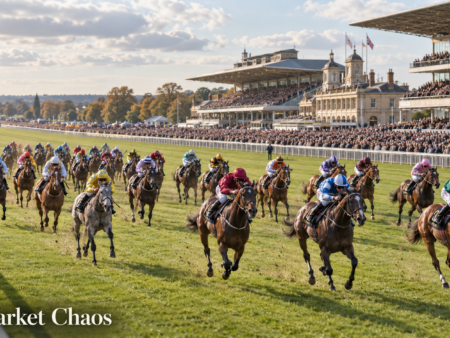
When the horses came down to the start and the race got underway, the crowd came to life around me. As they thundered past the grandstand that electric roar went up and I felt the hair stand up on the back of my neck. A tingle went right down my spine.
That was the moment. Right there. I knew this was where I belonged.
I backed four winners that afternoon and we cleaned the bookies out. The only dampener on a perfect day was a poor old fella on the way out who’d had one too many and was sick on my brother. Not the ending he’d hoped for , but not enough to put a dent in what had been, for me, a day that changed everything.
It was around that time that Pebbles , the brilliant filly trained by Clive Brittain ,was doing her thing at Sandown. Ridden by Steve Cauthen in the 1985 Eclipse, she became the first filly ever to win the race in its 99-year history, beating Rainbow Quest with Bob Back in third. Later that same year she became the first British-trained winner of a Breeders’ Cup race. A horse of genuine greatness, and Sandown was where she announced herself to the world.
That’s the kind of history this track carries. The Eclipse has been producing moments like that since 1886.
📰 NOW THEY WANT TO MOVE IT
I recently came across a well-argued piece by respected analyst Kevin Blake making the case for moving the Eclipse two weeks later in the calendar. His argument is built on real data , field sizes have collapsed from an average of 11.3 runners in the early 2000s to just 5.2 in the last five years, the lowest of any Group 1 in Britain, Ireland or France. He puts the blame largely on the race’s proximity to Royal Ascot, with top trainers unwilling to back horses up just two and a half weeks after a big Royal Ascot effort.
It’s well researched. The numbers are real. I just don’t agree with the conclusion.
🧬 THE REAL PROBLEM ISN’T THE CALENDAR — IT’S THE HORSES
Moving the Eclipse two weeks doesn’t fix what’s actually wrong. And what’s actually wrong is that the horses themselves are increasingly less durable than they used to be.
Modern breeding has prioritised speed and precocity , horses that look spectacular at two and three years old, win early, and command enormous stud value ,at the expense of the soundness and stamina that used to define the thoroughbred. We are producing horses that peak fast and look brilliant doing it, but can’t handle the kind of back-to-back campaigns that used to be completely routine.
A top-class horse in the eighties could run at Royal Ascot and back up a fortnight later without it being treated as a crisis. Today that same scenario triggers a conversation about whether the horse can physically cope. That shift didn’t happen because of where the Eclipse sits on the calendar. It happened because of what we’ve bred.
Add into that the increasing prevalence of quick, firm summer ground as our seasons get hotter, and you’ve got horses that are physically less robust running on surfaces that are harder on their legs than ever. That combination is doing far more damage to field sizes across the entire Pattern than any scheduling issue.
⚖️ MOVING THE DATE TREATS THE SYMPTOM, NOT THE DISEASE
Shift the Eclipse two weeks and you might get a temporary bump in runners. But you haven’t fixed anything. The horses are still fragile. The ground is still firm. The breeding priorities haven’t changed.
In five years we’ll be having the same conversation about field sizes, just on a different Saturday in July. Tinkering with the calendar is what administrators do when they don’t want to have the harder conversation about what’s happening to the thoroughbred itself.
🏛️ LEAVE IT ALONE
I’m a traditionalist. The Eclipse has occupied roughly the same spot in the calendar for the best part of a century and a half. Sandown in early July, that’s what it is, that’s what it’s always been, and some of the greatest horses who ever raced have graced that occasion in that slot.
I stood there as a young man and watched history being made on a warm summer’s afternoon. The hair on the back of my neck stood up and I knew I was hooked for life.
Don’t move the race. Fix the horses.
💬 YOUR THOUGHTS
Do you think British racing has a breeding and soundness problem? And what’s your own Eclipse memory , drop it in the comments below. 👇
Follow Pro Racing Edge for daily tips and straight talking opinion from someone with over 40 years in this sport.