🏚️ WHAT HAPPENED TO FOLKESTONE
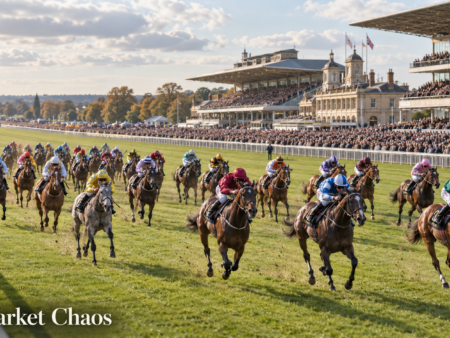
Folkestone racecourse had been racing since 1898. Over 114 years of history on a right-handed track at Westenhanger, just off the M20. Both flat and National Hunt racing. The Queen Mother’s favourite track. Frankie Dettori rode there. Tony McCoy rode there. It had its own character, its own loyal crowd, its own place in the Kentish calendar.
Arena Racing Company closed it in December 2012. They called it a temporary closure ,outdated facilities, they said, and a delay to a housing development that would fund a new grandstand. The last meeting was held on 18th December 2012 with around 2,500 faithful supporters turning up to say what they hoped was au revoir rather than goodbye.
It was goodbye.
The running rails came down. The steeplechase fences were removed. The track that once saw 34,800 visitors in a single year was left to rot. As Racing Post journalist Lee Mottershead wrote after visiting the abandoned site ,“They once raced horses here.”
🏗️ WHAT’S THERE NOW
Nothing. Wasteland.
The grandstands still stand ,barely. The weighing room still has a sign on the door marked ‘stewards.’ The paddock is still there behind the main stand. But the racing surface has been reclaimed by grass and tall ugly weeds. The steeplechase fences are gone. The rails are gone.
And the plan? A housing development called Otterpool Park , up to 10,000 homes on and around the site of what was once Kent’s only racecourse. The land that King Canute once owned, that has hosted racing for over a century, is earmarked for a garden town.
The closure was called temporary. The development tells you everything you need to know about how temporary it actually was.
😡 WHY THIS MATTERS
Let me be direct about what happened here and why it matters to every racing fan in the country — not just in Kent.
Folkestone was closed because it wasn’t generating enough profit for Arena Racing Company. Average attendance was around 1,600 per fixture , not spectacular, but not nothing either. On big days the crowds came. On family days the crowds came. It was a living, breathing part of the local community.
But the big racing operators ,the companies that control the major tracks , have no financial incentive to invest in smaller local courses. The money is at Cheltenham, Ascot, Newmarket, Sandown. The big festivals, the big crowds, the big hospitality revenues. A modest track in Kent serving local punters? Not worth their while.
So they closed it. Called it temporary. Watched it decay. And let the housing developers move in.
📊 KENT BY THE NUMBERS
Consider this. Kent has a population of over 1.9 million people. It is one of the most densely populated counties in England. It sits between London and the Channel ,easy to reach, well connected, with a racing heritage stretching back centuries.
It has zero racecourses.
Meanwhile the racing industry scratches its head about why attendances are falling at the major festivals. Why young people aren’t getting into the sport. Why ordinary punters are staying home.
Here’s why. You took their local track away. You gave them no reason to make racing part of their lives. And then you’re surprised when they find something else to do on a Saturday afternoon.
🎠 WHAT RACING HAS LOST
The thing about a local track that the big festivals can never replace is accessibility. You didn’t need to book a hotel or take a day off work. You didn’t need to budget £150 for a day out. You could jump in the car or catch a train, spend a reasonable afternoon watching real racing, and be home in time for tea.
That accessibility is what hooks people on this sport. It’s what hooked me. Standing at Folkestone on a midweek afternoon watching modest horses run their hearts out in a handicap , that’s where the love of racing grows. Not in a corporate hospitality box at Royal Ascot.
When you close the local tracks you don’t just lose the attendance figures. You lose the next generation of racing fans before they’ve had a chance to fall in love with the sport.
⚖️ THE MONOPOLY NOBODY TALKS ABOUT
There is a deeper issue here that the racing industry refuses to address honestly.
The major racecourse operators ,Arena Racing Company, the Jockey Club ,control the vast majority of British racing. They have every incentive to concentrate resources on the flagship meetings that generate the most revenue and no incentive whatsoever to invest in smaller regional tracks that serve local communities.
The result is a sport that is slowly but deliberately consolidating around a handful of premium venues while abandoning the grassroots infrastructure that used to make racing genuinely accessible to ordinary people.
Folkestone is the clearest example. But it isn’t the only one. Brighton, Windsor, smaller tracks across the country have all faced similar pressures. The direction of travel is obvious , bigger meetings, fewer venues, higher prices, smaller and wealthier audiences.
And Kent ,a county of nearly two million people within easy reach of London ,gets to watch from a distance while its former racecourse slowly disappears under a housing estate.
💬 THE BOTTOM LINE
Racing asks why its crowds are shrinking. The answer isn’t complicated.
You priced people out of the big meetings. You closed their local tracks. You gave them no affordable, accessible way to be part of the sport. And now you’re surprised they’ve found something else to do.
Kent deserves a racecourse. The sport deserves better than an industry that consolidates upward while its grassroots wither and die.
If you’re a Kent racing fan who remembers Folkestone ,or if you’ve lost your own local track somewhere else in the country , drop it in the comments below. Let’s hear how many people this sport has quietly abandoned. 👇
Follow Pro Racing Edge for daily tips and straight talking racing opinion — always on the punter’s side.