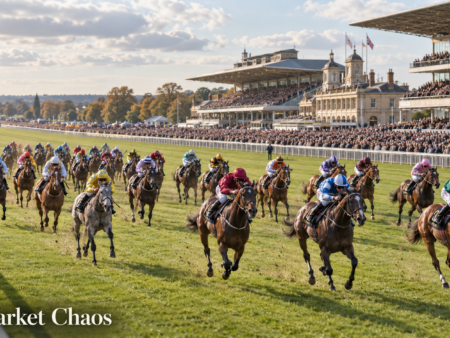
This week’s heatwave has done more than cancel four race meetings and push others to early morning starts. It has held a mirror up to a sport that cannot afford to stand still.
With four fixtures abandoned on Wednesday alone — Kempton, Salisbury, Worcester and Ffos Las — and Thursday’s cards at Nottingham and Newmarket brought forward to beat the worst of the heat, British racing has had its first serious taste of what the coming years may regularly demand of it. If you think this week is a one-off, think again. Our summers are getting hotter. This will happen again, and it will happen more often.
The question is not whether racing needs to adapt. It already is, whether it planned to or not. The real question is whether the British Horseracing Authority, racecourses, bookmakers, exchanges, trainers, jockeys and — crucially — punters are ready to embrace a fundamentally different racing landscape.
Morning Racing — A Permanent Fix or a Temporary Patch?
The early starts we’ve seen this week have been presented as emergency measures. Nottingham running from 10.30am to 1pm. Newmarket starting at 10.45am. Necessary, yes — but also revealing.
Here’s something the BHA might not have anticipated: punters may actually like it.
Morning racing is not a new concept globally. In Australia and parts of the Middle East, early starts are the norm rather than the exception. British punters, given the chance to get their racing done before lunch and spend their afternoons elsewhere, may find the format more appealing than anyone expects. If early starts prove popular — and I believe there’s a genuine chance they will — the industry should be paying close attention rather than rushing to return to the traditional afternoon schedule the moment temperatures drop.
This week could be the accidental beginning of something significant.
What It Means for the Horses
Here is where it gets genuinely interesting, and where my 40 years in this sport tells me something worth paying attention to.
Most racehorses do their best work in the early morning. Gallops happen at dawn. Horses are creatures of routine and the early hours are when they are sharpest, freshest, and most alert. There is a credible argument that morning race times — far from being a disadvantage — could actually produce better performances from certain types of horse.
Over time, if morning racing becomes more established, we will start to see patterns emerge. Horses that thrive on freshness and sharp early conditions will become more identifiable. Trainers who excel at preparing horses for morning starts will develop an edge. The form book will evolve to reflect a new set of variables.
For serious punters this represents both a challenge and an opportunity. The old assumptions about how to read form will need updating. Horses that look moderate on afternoon form may reveal themselves as something different entirely when asked to run at 10.30am on fresh ground. The punter who recognises this early and adjusts accordingly will have a genuine edge over those who don’t.
The Wider Picture
The BHA, racecourses, bookmakers and exchanges all have significant adjustments to make if morning racing becomes a regular feature of the British calendar. Broadcast schedules, trading patterns, staffing, ground preparation — all of it changes with the start time. Bookmakers who currently shape their morning around international racing would need to rethink their entire operation for domestic fixtures.
None of this happens overnight. But the conversation needs to start now, while the industry has the opportunity to shape change rather than be forced into it reactively.
British racing has survived wars, foot and mouth, pandemics and financial crises. It will survive hotter summers. But survival alone is not the ambition. The sport needs to look at what is coming, plan for it seriously, and — for once — get ahead of it rather than scrambling to catch up.
This week’s early starts may look like a footnote in the 2026 racing calendar. Give it five years and we may look back on them as the moment the conversation began.